
qdd actuator
What Is a QDD Actuator? A Practical Guide for Robot Joint Buyers
QDD actuators combine a high-torque motor with a low-ratio transmission so dynamic robots can keep useful torque while preserving backdrivability and lower reflected inertia. This guide turns that definition into selection checks, prototype tests, and RFQ inputs.

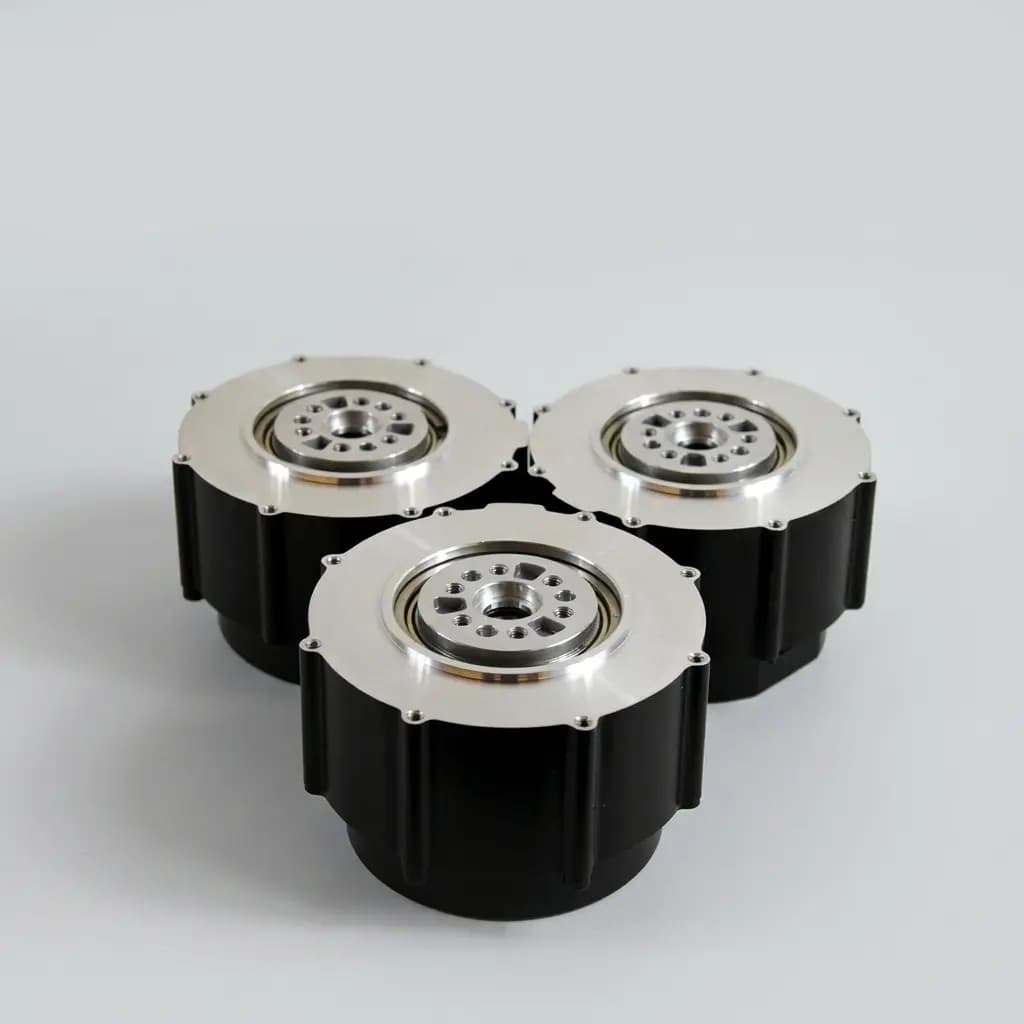
Product References for This Article
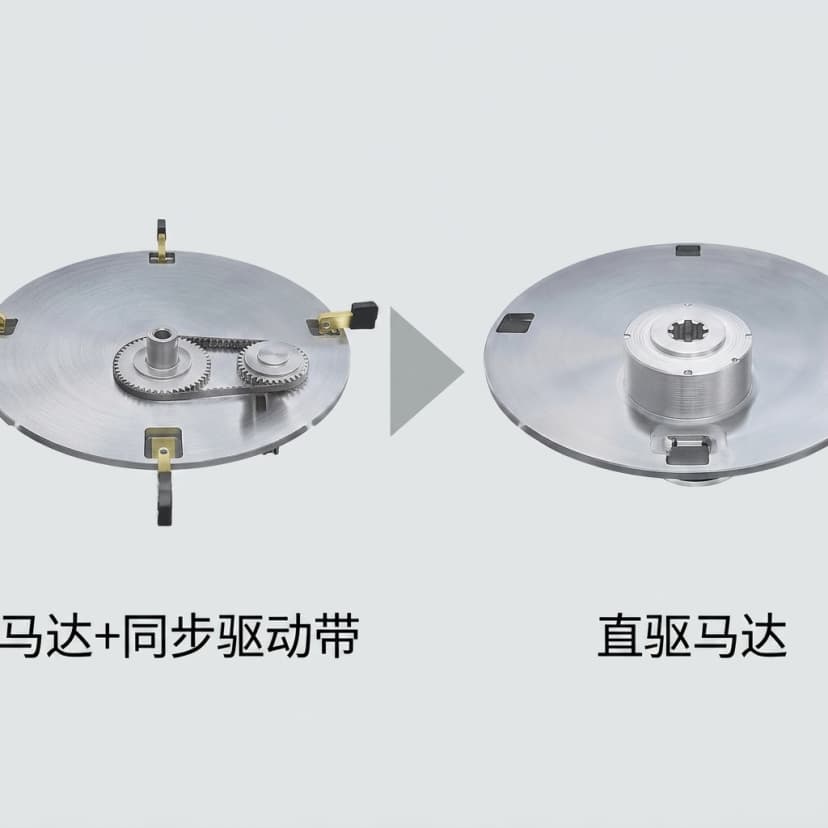
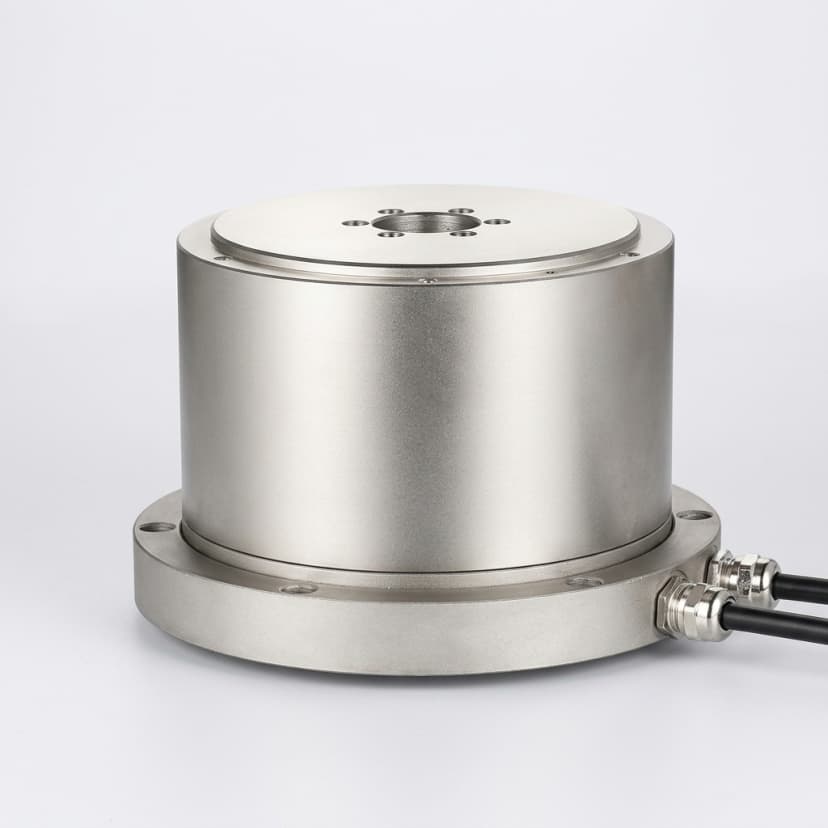
These images are included to make the engineering discussion more concrete. Use them as visual references for actuator envelope, output interface, routing, and architecture trade-offs before requesting exact drawings or datasheets.
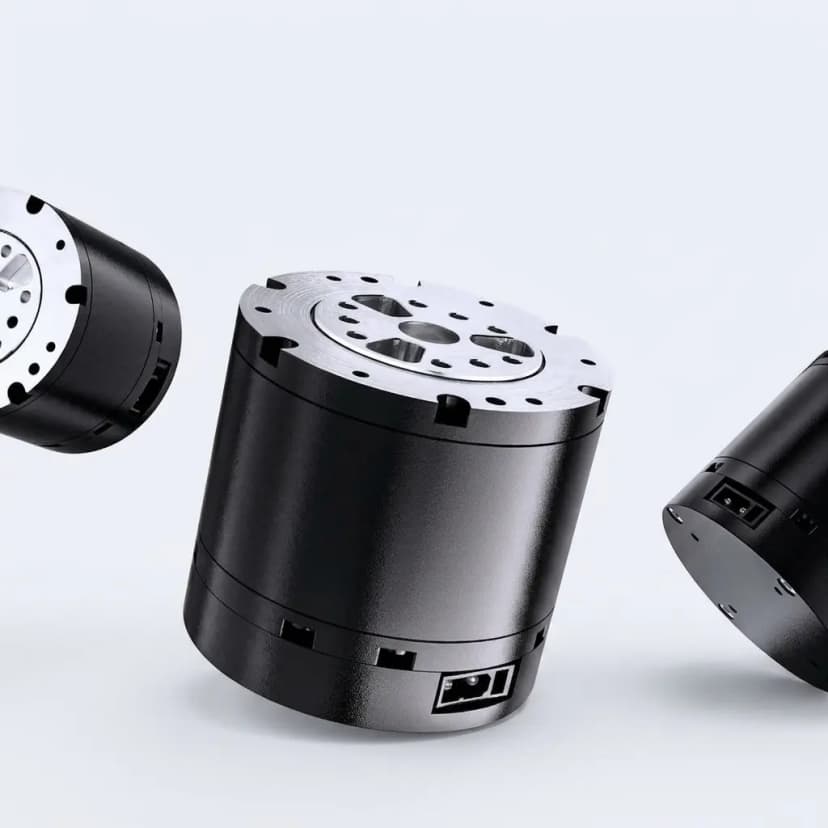
QDD is an architecture decision, not a marketing label
I get asked "what is a QDD actuator?" at least twice a week. The short answer: it is a high-torque brushless motor paired with a low-ratio reducer — typically between 6:1 and 10:1 — so the joint keeps enough output torque for dynamic motion while staying backdrivable. Compare that to a harmonic drive at 50:1–160:1 or a cycloidal at 30:1–80:1, and you start to see why the joint "feel" is fundamentally different.
The key physics is reflected inertia. When a motor spins behind a reducer, the load feels the motor inertia multiplied by the square of the gear ratio: J_reflected = J_motor × n². A typical 8318-size frameless motor has a rotor inertia around 0.0008 kg·m². Behind a 6:1 planetary, that reflects as 0.029 kg·m² at the output. Behind a 100:1 harmonic, it reflects as 8.0 kg·m². That 275× difference is why a QDD joint feels transparent under torque control and a high-ratio joint feels stiff.
QDD architecture diagram for actuator buyers
This diagram separates the motor, low-ratio reducer, encoder feedback, and output joint path. In practice, every block affects backdrive feel — you cannot evaluate one in isolation.
- The motor defines continuous thermal capacity. An 8318 frameless BLDC at 48V can typically sustain 4–6 Nm continuously and burst to 15–20 Nm for a few seconds.
- The reducer ratio is the single most impactful decision. Going from 6:1 to 10:1 nearly triples reflected inertia (36× vs 100× the motor J).
- Encoder placement matters more than resolution alone. A 19-bit encoder on the output side gives ~0.0007° resolution, but bus latency above 500 µs can negate this advantage for fast torque loops.
Typical QDD actuator parameters vs alternatives
| Parameter | QDD (6:1–10:1) | High-ratio harmonic (50:1–100:1) |
|---|---|---|
| Reflected inertia (8318 motor) | 0.029–0.08 kg·m² | 2.0–8.0 kg·m² |
| Backdrive torque (no power) | 0.3–1.5 Nm typical | 5–25 Nm typical (often not backdrivable) |
| Output torque (continuous) | 24–60 Nm | 40–200 Nm |
| Peak torque (short burst) | 60–200 Nm | 100–600 Nm |
| Backlash | 5–15 arcmin (planetary) | <1 arcmin (harmonic) |
| Typical weight (integrated) | 0.4–1.2 kg | 0.6–2.5 kg |
A concrete sizing example: 12 kg quadruped knee joint
I will walk through a real sizing exercise. A 12 kg quadruped robot with 0.25 m leg segments needs a knee actuator. During trotting, the knee must support roughly half the body weight through each stance phase. Static torque estimate: τ = (m/4) × g × L = 3 kg × 9.81 m/s² × 0.25 m ≈ 7.4 Nm. But that is just the static case.
During a trot at 1.5 m/s with ~60% duty cycle per leg, the peak knee torque hits about 2.5× the static value, so roughly 18–20 Nm. The RMS torque over the full gait cycle — including swing phase where the motor is nearly unloaded — works out to around 8–10 Nm. That RMS number, not the peak, is what determines whether the motor overheats after 30 minutes of walking.
A QDD module with a 6:1 ratio and an 8318 motor (continuous torque ~5 Nm × 6 = 30 Nm at output) has comfortable margin for this duty. A direct-drive motor without the reducer would need 20 Nm continuous from the motor alone — that requires a much larger, heavier stator that defeats the purpose of a compact leg joint.
When to shortlist QDD vs other architectures
| Your situation | Recommendation | Why |
|---|---|---|
| Legged robot (quadruped/biped) | QDD is the default starting point | Impact tolerance, backdrivability, and gait tuning all favor low reflected inertia |
| Exoskeleton or wearable | QDD with careful friction review | Users feel every 0.1 Nm of friction — test backdrive with the full cable harness installed |
| Precision robot arm (pick and place) | Harmonic or cycloidal first | Static stiffness and sub-arcminute positioning outweigh backdrivability for most manipulation tasks |
| Research / rapid prototyping | QDD for speed of iteration | Torque control tuning is dramatically faster with low-ratio joints — I have seen teams go from unboxing to stable walking in 3 days vs 3 weeks with high-ratio joints |
The 7 data points every QDD RFQ needs
- Continuous torque and peak torque at the joint output — not the motor shaft. Include the motion profile duration.
- Target gear ratio or maximum acceptable reflected inertia in kg·m².
- Supply voltage and peak current limit from your motor driver.
- Mechanical envelope: max diameter, max length, and output flange bolt pattern.
- Backdrive torque target: how easy must the joint be to move by hand with power off?
- Thermal environment: ambient temperature, mounting material (aluminum vs plastic), and whether forced cooling exists.
- Quantity: 1–5 pcs for prototyping vs 100+ for pilot, because tooling and lead-time decisions are completely different.
Prototype validation checklist — what to test on your first samples
| Test | What to measure | Red flag |
|---|---|---|
| Backdrive feel | Torque to rotate the unpowered joint by hand, measured at 3+ positions through the range | Backdrive torque varies by >50% across the rotation (indicates gear mesh or alignment issue) |
| Thermal soak test | Run the actual gait cycle for 30 min, record winding temp every 60 seconds | Winding exceeds 120°C or housing exceeds 80°C — your continuous torque estimate is wrong |
| Torque ripple at low speed | Command 1 rad/s constant velocity, log torque command — ripple should be <5% of continuous rating | Periodic torque spikes correlated with encoder index or pole count |
| Mechanical integration | Mount in robot structure, run full range of motion, check cable clearance at every position | Cable pinch, connector interference, or frame contact that was not visible in CAD |
My honest take on common buying mistakes
The number one mistake I see: teams compare peak torque numbers from datasheets and pick the highest one. Peak torque tells you almost nothing about real robot performance. A QDD module rated at 36 Nm peak but only 14 Nm continuous will overheat in 8 minutes if your gait demands 16 Nm RMS. Always ask for the thermal derating curve, not just the peak number.
The second mistake: specifying "we need a backdrivable actuator" without quantifying what that means. Backdrive torque of 0.5 Nm feels like butter. Backdrive torque of 3 Nm feels noticeably stiff. Both are technically "backdrivable." Write a number in your RFQ.
The third mistake: freezing the mechanical design before testing cable routing through the full range of motion. I have seen three different robot companies redesign their knee housing after discovering that the encoder cable gets pinched at 140° flexion. Test this on day one, not after you have ordered 50 units.
Selection Metrics
| Metric | Review Range | Why It Matters |
|---|---|---|
| Peak vs RMS torque | Application-defined | A joint may meet peak torque but overheat during repeated gait or manipulation cycles. |
| Backdrive torque | Validated during sample review | Backdrive feel is central to QDD actuator selection for dynamic and interactive robots. |
| Reflected inertia | Lower than high-ratio architectures | Lower reflected inertia supports impact response, torque transparency, and controller tuning. |
| Thermal rise under repeated duty | Measured during sample validation | QDD selection is weak if the buyer checks peak torque but never runs the real repeated motion cycle. |
| Mechanical integration margin | Envelope and load-case dependent | Mounting, cable routing, bearing support, and connector access often decide whether a prototype can become a batch design. |
RFQ Checklist
- Target robot type and joint location
- Continuous torque, peak torque, target speed, voltage, and duty cycle
- Preferred reduction ratio or backdrivability target
- Mechanical envelope, shaft/flange drawing, or STEP reference
- Encoder, brake, controller, and communication interface preference
- Expected prototype validation method, including repeated duty, backdrive feel, and thermal checks
- Documents needed for internal approval, such as drawing, CAD review, test data, packing, or compliance notes
- Prototype quantity, annual forecast, delivery country, and timeline
Related Pages
Buyer FAQ
Is a QDD actuator the same as a servo actuator?
Not exactly. A QDD actuator is usually a servo-controlled actuator, but the term QDD refers to the low-ratio, high-torque architecture that keeps the joint more backdrivable than many high-ratio servo joints.
Can QDD actuators be customized for OEM robot programs?
Yes. Gear ratio, winding, shaft, encoder, connector, cable routing, housing, brake, interface, and private-label requirements can be reviewed when the RFQ includes enough joint-level data.
What is the most important missing data in many QDD RFQs?
The repeated duty cycle is often missing. Buyers may provide peak torque and speed, but the supplier also needs RMS torque, motion duration, rest time, ambient temperature, and expected thermal limits to judge whether the actuator is realistic.
Inquiry Email
Include robot type, joint location, torque/speed/voltage targets, quantity, and destination.
Instant Chat
+86 18857971991
Send QDD actuator specs, STEP files, or actuator references for engineering review.