LogoQDD Actuator
Start inquiry
LogoQDD Actuator
WhatsApp
LogoQDD Actuator

Shenzhen and Dongguan QDD actuator factory network supporting robot joint selection, prototype validation, sample review, and B2B export delivery.

Inquiry Email

[email protected]

Email app

Include robot type, joint location, torque/speed/voltage targets, quantity, and destination.

Instant Chat

+86 18857971991

Chat on WhatsApp

Send QDD actuator specs, STEP files, or actuator references for engineering review.

Products
  • QDD Robot Actuators
  • Backdrivable Actuators
  • Hollow-Shaft QDD Actuators
  • All Products
Solutions
  • Quadruped Robots
  • Humanoid Lower Limbs
  • Exoskeletons
  • All Applications
OEM Capabilities
  • Custom QDD Actuator
  • Prototype to Production
  • Private-Label Actuators
  • OEM Hub
Engineering
  • QDD Explained
  • QDD vs Harmonic Drive
  • Thermal Sizing
  • All Engineering Resources
  • QDD Actuator Blog
  • Buyer Resources
Resources
  • CAD / Datasheet Library
  • Developer Support
  • Compliance Documents
  • About
  • Manufacturing Network
  • Contact / RFQ
  • Privacy Policy
  • Cookie Policy
  • Terms of Service
© 2026 QDD Actuator. All Rights Reserved.|Direct QDD actuator RFQ: [email protected] | WhatsApp +86 18857971991 | LinkedIn contact.
Backed by Linkup Ai Co., Ltd. Manufacturing delivered by the Advanced Manufacturing Division of Linkup Precision.|Legal entity: Linkup Ai Co., Ltd.
Engineering & Dynamic Analysis

Quasi-Direct-Drive Motor

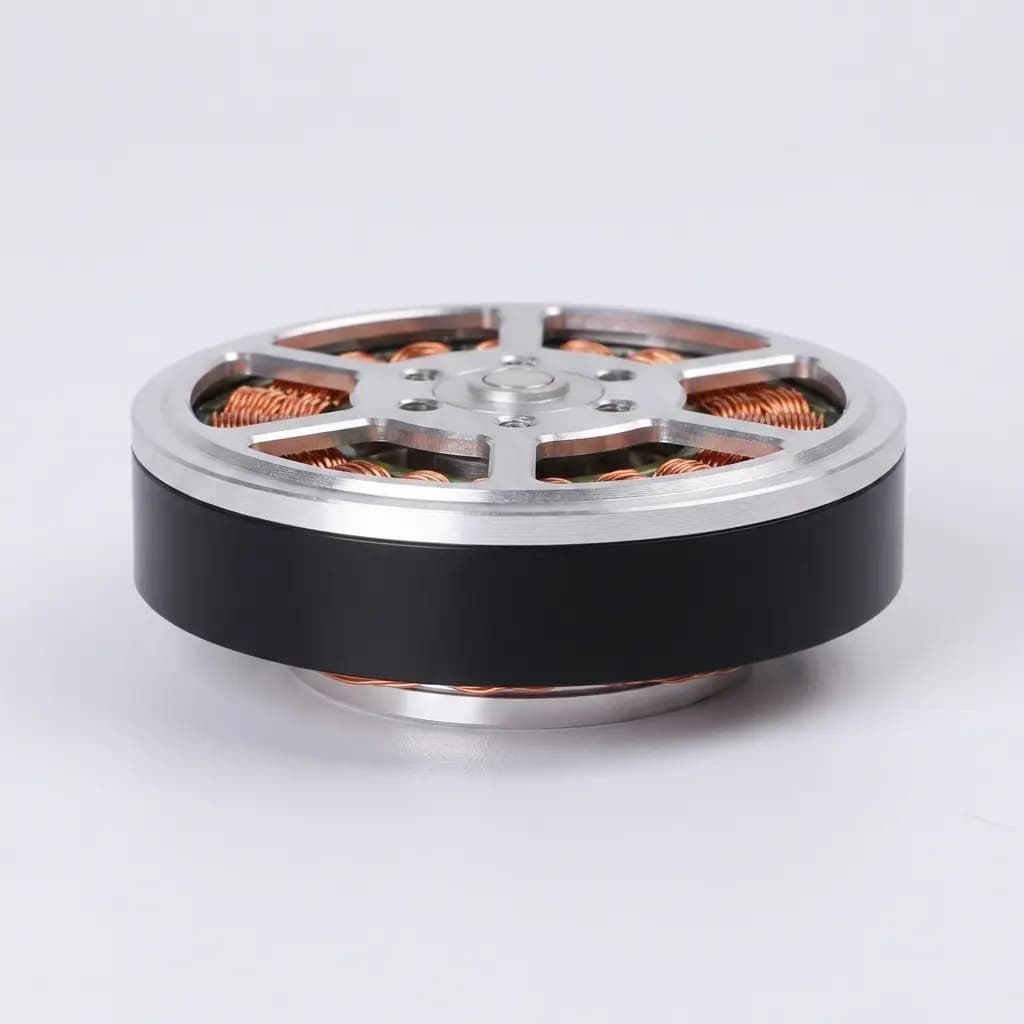
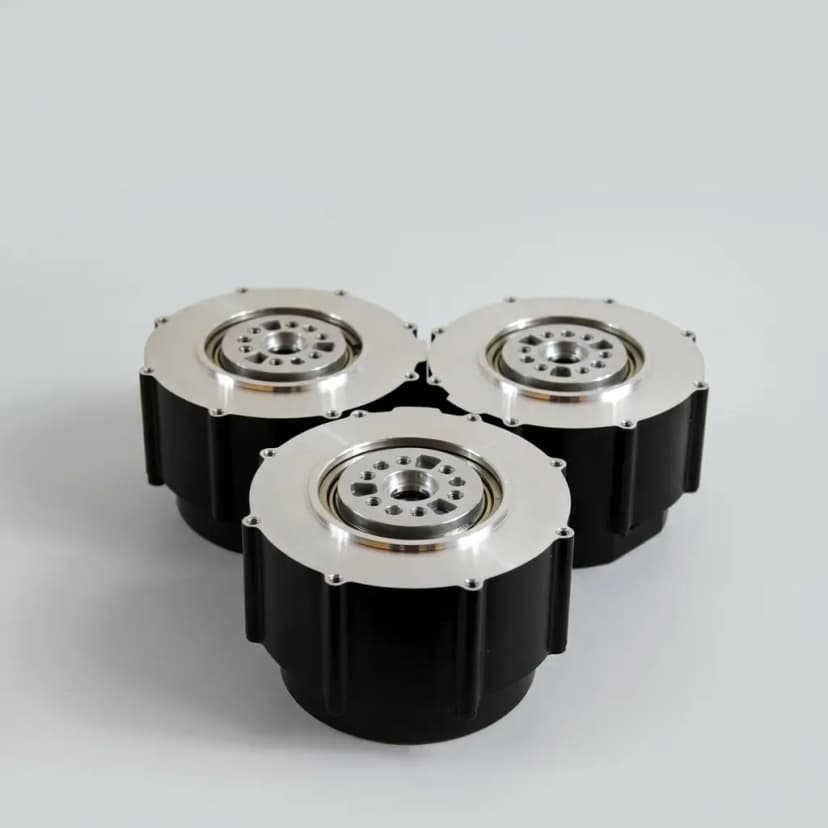
High-performance quasi-direct-drive (QDD) motors and integrated modules, including 105Nm configurations, designed for legged robotics, humanoids, and active force control.

Hybrid SpecCovers 105Nm Integrated Quasi-Direct-Drive Motor Module standard.
1. Selection Tool2. CAD & Structure3. Core Decisions4. Tech Comparisons5. FAQ & RFQ

QDD Joint Selection & Load matching

Adjust target joint requirements below to estimate reflected inertia, gear ratios, and matched actuator models.

1. Input Target Joint Envelope

Robot Joint Application
105 Nm
10 Nm (Light arm)105 Nm (Winding Target)350 Nm (Heavy Gait)
150 RPM
50 RPM200 RPM450 RPM

2. Output Analysis✓ Ready

Recommended Ratio9:1Planetary Stage
Reflected Inertia0.0486 kg·m²J_rotor × N²
Est. Backdrive Torque< 0.51 NmHigh Backdrivability
Motor Torque & Speed12.96 Nm @ 1350 RPMBefore planetary losses
■ Calculations Log:
    Matched Module:QDD-105-9
    Request QDD-105-9 Specs

    105Nm QDD Actuator Cross-Section & CAD Reference

    The 105nm integrated quasi-direct drive motor module features a lightweight 9:1 planetary reducer nested within the rotor core. This design optimizes coaxial space and heat dissipation.

    • Integrated BLDC Stator
    • Sun Gear on Rotor Shaft
    • Dual 19-bit Encoders
    • Solid Planetary Carrier

    Target Dynamic Winding Specs:

    Peak Torque105 Nm
    Continuous35 Nm
    Total Mass2.45 kg
    Al-Alloy Outer Case (Flange)BLDC Stator Coils (48V)Rotor Neodymium MagnetsSUNPLANETPLANET9:1 Ring GearAbsolute EncoderOutput

    Core Decisions & Recommendations

    A dynamic robot designer must determine when to buy standard catalog modules versus committing to winding customization.

    Specify by Gait Duty Cycle, not Peak Torque

    A 105Nm QDD module can deliver its peak torque during high-impact jumps, but will thermal-trip if continuous static holding exceeds 35Nm for more than 4 minutes.

    Planetary Reflection Limits Torque Control

    Ratio choice controls torque transparency. The 9:1 ratio has a reflected inertia of 0.0486 kg·m², which allows high-bandwidth current-loop force control without direct load-side torque sensors.

    Target Voltage Matches Winding Margin

    Running 48VDC on 105Nm windings ensures peak speeds of 24 rad/s under load. Running at 24VDC limits top speed and introduces back-EMF saturation early in gaits.

    Application Boundaries & Fit

    Ideal Applications

    • ✔Quadruped leg joints: Absorbs high drop landings.
    • ✔Humanoid lower limbs: Compliant balance control.
    • ✔Exoskeletons: Minimum resistance to manual hand driving.

    Unsuitable Applications

    • ✘CNC precision axes: Planetary gear has typical 3-5 arcmin backlash.
    • ✘Heavy static hoisting: Low-ratio gears will backdrive when powered off.
    • ✘Battery-restricted UAVs: QDD joint modules are heavy (~2.5 kg).
    Verification Note: In case of static holding applications, a customized electromagnetic spring-applied safety brake is required to prevent payload dropping during power-off states.

    Transmission Technologies Compared

    How QDD modules (105Nm class) compare with high-ratio Harmonic Drive and Series Elastic Actuator (SEA) systems.

    ParameterQDD Motor Module (105Nm target)Harmonic Drive ActuatorSeries Elastic Actuator (SEA)
    Reduction RatioLow (6:1 - 10:1)High (50:1 - 160:1)Medium (30:1 - 80:1) + Spring
    Backdrivability (Hand-driven)< 0.8 Nm (Excellent)Non-backdrivable / > 12 NmCompliance backdrive
    Reflected Rotor InertiaVery Low (0.03 - 0.05 kg·m²)Very High (5.0 - 15.0 kg·m²)Filtered by spring elasticity
    Torque Control Loop BandwidthHigh (50 - 150 Hz via FOC current)Low (< 10 Hz, needs strain gauges)Medium (15 - 40 Hz, spring-limited)
    Shock / Collision ToleranceHigh (Gears backdrive to absorb energy)Fragile (Flexspline teeth shear)High (Spring deflection absorbs shock)
    Mechanical Backlash / Stiffness3 - 6 arcmin / Medium stiffness< 0.5 arcmin / High stiffnessHigh backlash / Physical low stiffness

    Technical FAQ

    Why is reflected inertia a critical safety metric for humanoids?

    Reflected inertia is calculated by multiplying the motor rotor inertia by the square of the gear ratio. In traditional high-ratio harmonic systems, a 100:1 ratio multiplies rotor inertia by 10,000. Under high-speed collisions, this inertia causes high destructive forces before the controller can react. In a 9:1 QDD system, the multiplier is only 81, allowing the output shaft to rotate backward and safely absorb impact.

    Can a QDD motor run without a torque sensor?

    Yes. Because QDD gearboxes have high efficiency (90%+) and low friction, the motor-side current (measured via FOC shunt resistors) has a highly linear relationship with the output torque. Current-based torque estimation is sufficient for walking robots, saving weight, cost, and cabling complexity.

    RFQ Specifications Checklist

    Include these parameters in your inquiry to accelerate quotation and engineering review:

    • 1.Joint configuration, peak dynamic loading, and gait trajectory details
    • 2.Target torque class (e.g., 105Nm peak) and motor input voltage (24V–48V)
    • 3.Interface mechanical dimensions (flange, shaft type) or STEP models
    • 4.Encoder type, absolute feedback requirement, and brake options
    • 5.Expected prototype count, annual volume, and required certification (CE/RoHS)

    Request 105Nm QDD Motor Module Quote

    Contact our applications team to discuss your joint envelope, target ratios, loading cycles, and batch delivery schedules.

    Inquiry Email

    [email protected]

    Email app

    Include robot type, joint location, torque/speed/voltage targets, quantity, and destination.

    Instant Chat

    +86 18857971991

    Chat on WhatsApp

    Send QDD actuator specs, STEP files, or actuator references for engineering review.