
integrated QDD actuators vs frameless motors
Frameless Motors vs. Integrated QDD Actuators: A 2026 Build vs. Buy Sourcing Guide
Frameless motors can reduce unit BOM when a team owns housing, bearings, encoder alignment, thermal paths, firmware, and QA. Integrated QDD actuators trade a higher unit price for faster prototype motion, lower supplier count, and clearer field-service boundaries.

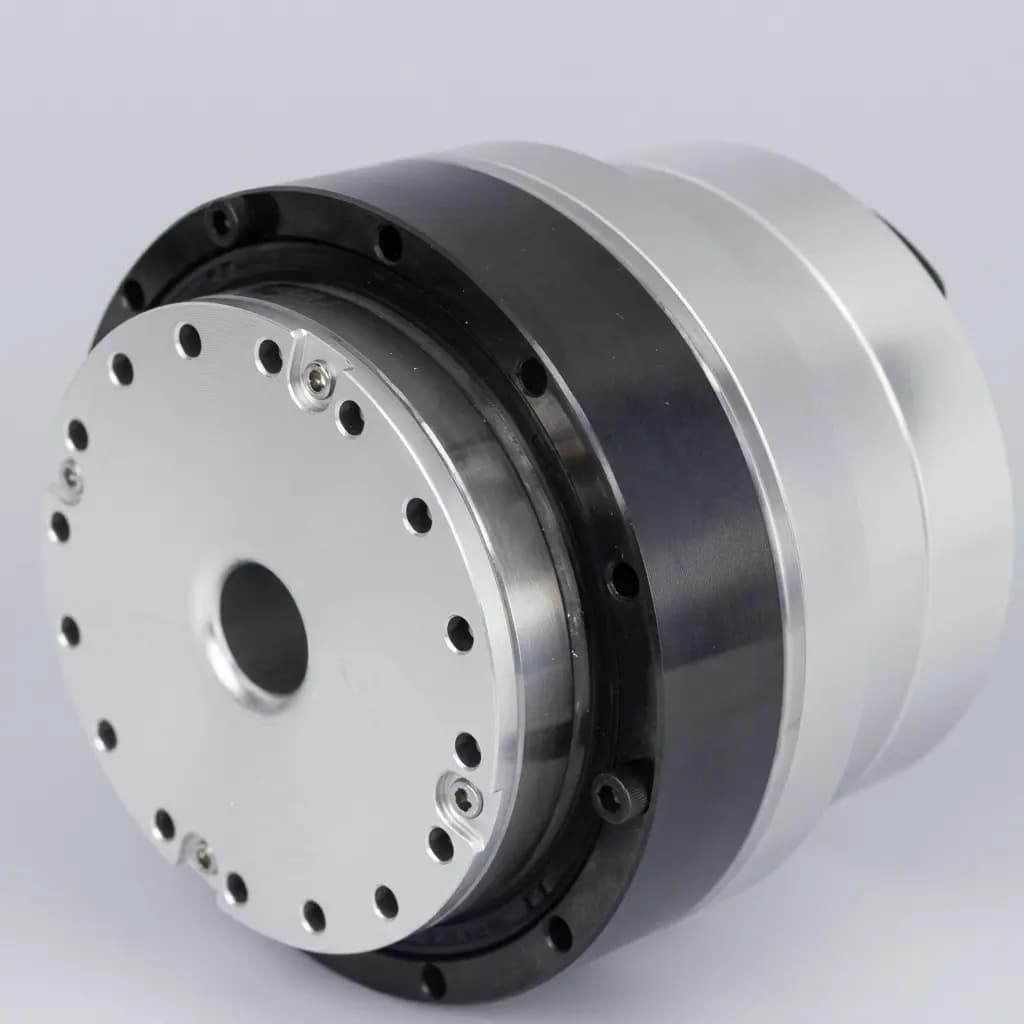
Product References for This Article
These images are included to make the engineering discussion more concrete. Use them as visual references for actuator envelope, output interface, routing, and architecture trade-offs before requesting exact drawings or datasheets.
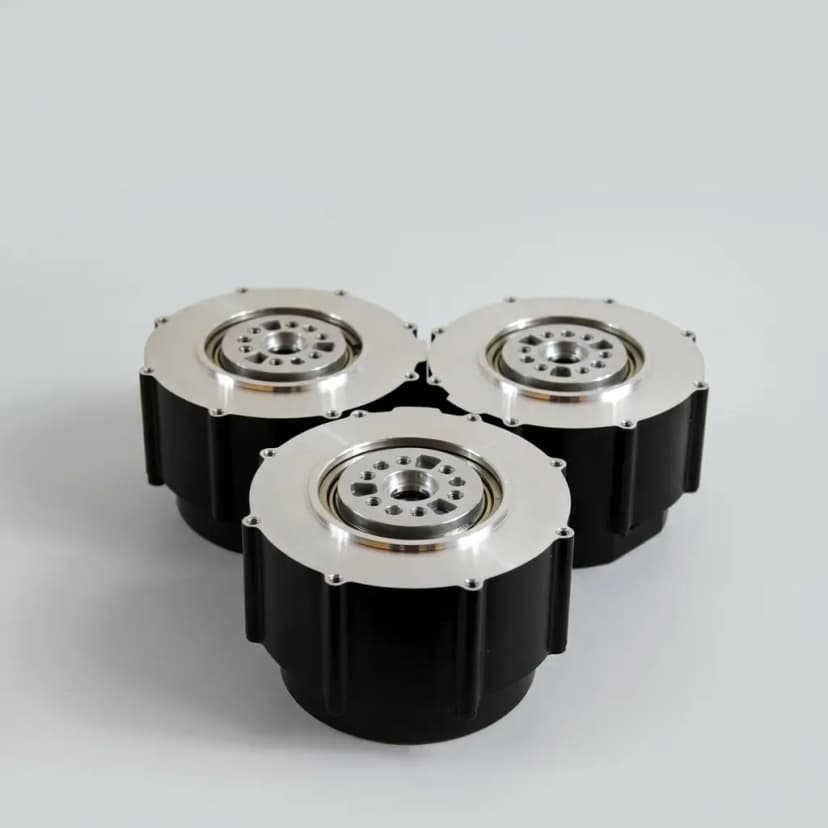
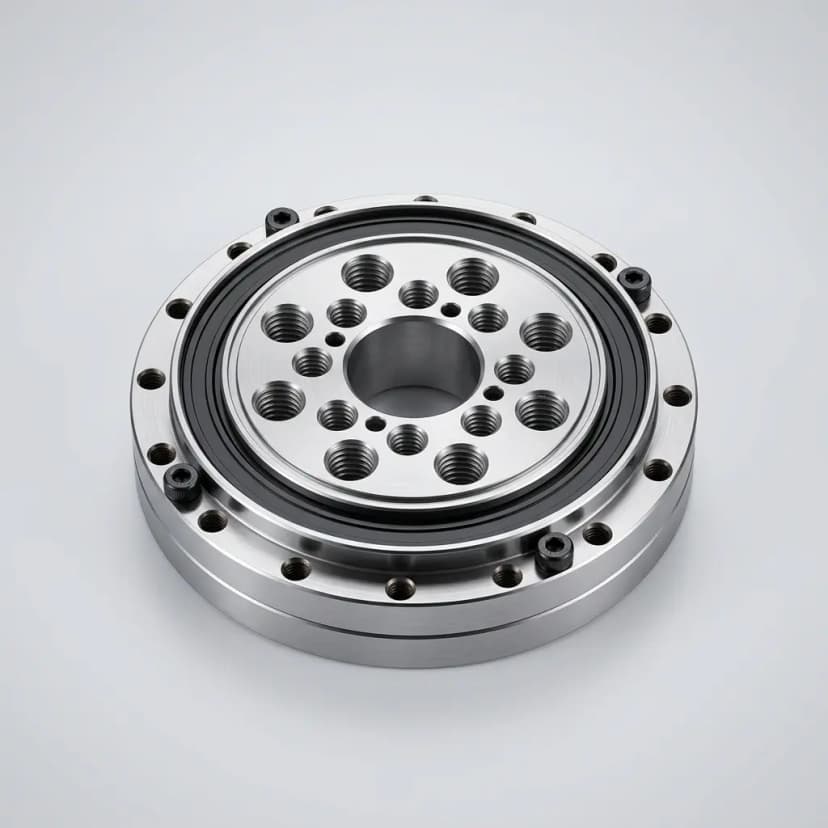
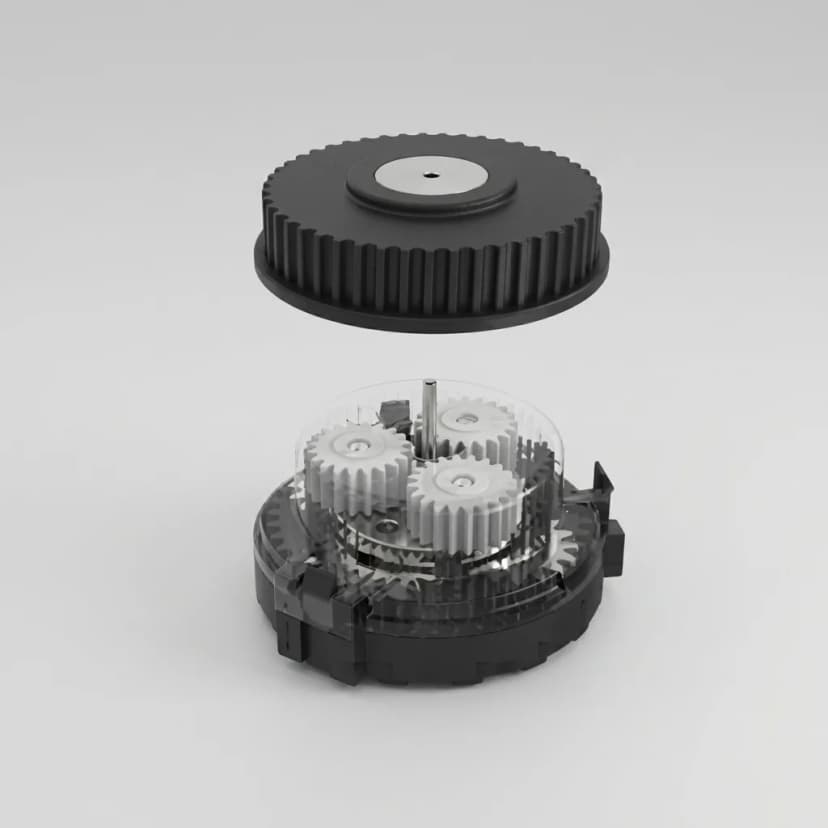
The build-vs-buy question is not motor price alone
A frameless motor kit is only the electromagnetic core: rotor and stator. To become a robot joint, it still needs a housing, bearing support, output interface, encoder stack, reducer, controller, harness, sealing, assembly process, and thermal path. That work can be worth owning, but only when the program has the engineering capacity and production volume to control it.
An integrated QDD actuator packages those decisions into one purchased module. The buyer pays more per unit, but the prototype team gets motion earlier, procurement manages fewer vendors, and field service can replace a joint instead of rebuilding a custom motor assembly.
Build vs buy comparison for QDD sourcing
| Evaluation dimension | Frameless motor kits | Integrated QDD actuators |
|---|---|---|
| BOM unit cost at high volume | Lowest bare motor cost, but excludes housing, bearings, encoders, reducer, controller, and assembly | Higher module cost because mechanics, sensing, reducer, and drive electronics are already integrated |
| Initial NRE and development load | High: mechanical design, air-gap control, thermal path, firmware, and production fixtures stay internal | Low: sample evaluation starts from a working joint module and supplier documentation |
| Time to first controlled motion | Often months because the joint must be designed, machined, assembled, and debugged first | Often weeks when standard modules, CAD, pinout, and protocol support are available |
| Design freedom | Maximum freedom for diameter, stack length, output interface, cooling, and chassis packaging | Constrained by catalog envelope, connector position, mounting pattern, and firmware boundary |
| Supply chain complexity | Multiple suppliers per joint: motor, magnets, bearings, encoders, controller, reducer, machining, harness | One primary module supplier, with fewer line items and clearer replacement planning |
| Thermal and mechanical risk | OEM owns heat flow, rotor-stator alignment, bearing preload, shock load, sealing, and QA yield | Supplier should provide validated continuous torque, temperature limits, drawings, and sample history |
| Best-fit program stage | Mature, high-volume platforms with stable geometry and internal actuator manufacturing capability | Prototype, pilot, distributor, research, and low-to-mid-volume OEM programs that need fast validation |
Where the build strategy hides work
The critical risk is tolerance stack-up. A frameless rotor and stator need a controlled air gap, and the final joint housing must keep that gap under shock, bearing preload, thermal expansion, and assembly variation. A rotor rub is not a minor quality issue; it can destroy the motor and contaminate the joint.
Thermal design is the second trap. A QDD joint can spend long periods producing static or low-speed torque, so copper losses need a repeatable path into the housing and surrounding robot structure. Without measured thermal soak data at the real duty cycle, a low bare-motor price can turn into repeated redesigns.
Lifecycle sourcing boundary
| Program stage | Likely safer choice | Reason |
|---|---|---|
| Concept prototype | Integrated QDD actuator | Controls and gait teams need a working joint before custom mechanics are stable. |
| Pilot batch under 500 units/year | Integrated QDD actuator | Supplier consolidation, serviceability, and faster iteration usually outweigh unit-price savings. |
| Low-to-medium volume, 500 to 5,000 units/year | Case-by-case | Build only if housing design, assembly fixtures, thermal data, and quality yield are already controlled. |
| High-volume mature platform | Frameless motor kit may win | Custom integration can pay back when geometry is frozen and every dollar of BOM matters. |
Supplier evidence checklist before sample PO
- Continuous torque rating with ambient temperature, duty cycle, winding temperature limit, and cooling assumption.
- Air-gap tolerance, bearing support requirement, concentricity target, and assembly inspection method for frameless kits.
- Encoder architecture, resolution, latency, shielding approach, and output-side feedback availability.
- Reducer ratio, backlash target, backdrive torque, lubrication, and shock-load limit for the final joint.
- Firmware protocol support, CAN/CAN FD/EtherCAT details, current limits, logs, and update process.
- Lead-time breakpoints at 10, 100, 1,000, and 10,000 units, including magnet and controller allocation assumptions.
- Field-service plan: replacement module, spare-part kit, calibration method, warranty boundary, and failure-analysis path.
Scope and limits for 2026 sourcing
Use these thresholds as a sourcing screen, not as universal pricing. Magnet supply, controller availability, machining cost, tariffs, and stock policy differ by vendor and destination. A serious comparison needs signed quotations plus sample validation data.
The strongest decision process is simple: sample the integrated actuator first when the robot concept is still moving, then revisit frameless integration only after the joint envelope, duty cycle, field loads, and annual forecast are stable enough to justify NRE.
Selection Metrics
| Metric | Review Range | Why It Matters |
|---|---|---|
| NRE payback threshold | Program-volume dependent | Frameless integration is only attractive when custom engineering, tooling, fixtures, and QA yield can be amortized. |
| Air-gap and concentricity margin | Motor and bearing dependent | Rotor-stator rub can destroy a custom joint, so tolerance control must be proven before production. |
| Thermal soak at real duty | Application-defined | QDD joints can overheat during repeated low-speed or holding torque even when peak torque looks sufficient. |
| Supplier count per joint | One module vendor vs many component vendors | Every added supplier increases procurement load, inspection work, lead-time risk, and root-cause ambiguity. |
| Service replacement time | Minutes for module swap vs depot teardown for custom assemblies | Field-service assumptions change warranty cost and customer downtime. |
RFQ Checklist
- Target joint location, robot mass, supply voltage, peak torque, RMS torque, speed, and repeated duty cycle
- Mechanical envelope, output interface, cable exit, bearing load case, and allowed housing changes
- Thermal validation method, ambient temperature, cooling path, and acceptable winding or housing temperature
- Backdrive torque, backlash, stiffness, shock load, and impact recovery expectations
- Encoder position, communication protocol, firmware boundary, and required logs or tuning access
- Annual forecast, sample quantity, pilot-batch timing, destination country, and inventory policy
- For frameless: who owns air-gap inspection, rotor balancing, assembly fixtures, and end-of-line testing
- For integrated: required drawings, CAD, pinout, test report, spare module plan, and failure-analysis process
Related Pages
Buyer FAQ
Can we prototype with integrated QDD actuators and switch to frameless motors later?
Yes, but treat it as an architecture transition. The chassis, encoder layout, controller tuning, thermal path, assembly fixtures, and QA process may all need to change.
Are frameless motors always lighter?
The rotor and stator alone are lighter, but the final joint still needs housing, bearings, reducer, sensing, wiring, sealing, and thermal mass. Compare complete joint weight, not bare motor weight.
When does frameless integration make financial sense?
It is most defensible when the robot geometry is stable, annual volume is high, internal actuator expertise exists, and the program can amortize tooling, fixtures, validation, and quality-control costs.
What should procurement ask integrated QDD suppliers first?
Ask for continuous torque data with thermal conditions, CAD, pinout, protocol details, backdrive and backlash data, lead-time breakpoints, sample stock, warranty boundary, and field replacement guidance.
What is the biggest hidden risk in a frameless motor route?
The biggest hidden risk is owning the whole joint: air-gap alignment, bearing preload, heat flow, encoder shielding, firmware behavior, assembly yield, and failure analysis all become internal responsibilities.
Inquiry Email
Include robot type, joint location, torque/speed/voltage targets, quantity, and destination.
Instant Chat
+86 18857971991
Send QDD actuator specs, STEP files, or actuator references for engineering review.