
qdd actuator vs harmonic drive
QDD Actuator vs Harmonic Drive: Choosing the Right Robot Joint Architecture
QDD and harmonic-drive joints solve different problems. QDD favors backdrivability and dynamic torque behavior, while harmonic-drive joints often favor compact high-ratio stiffness and precision. The right choice depends on duty cycle, impact, holding, backlash, envelope, and validation risk.

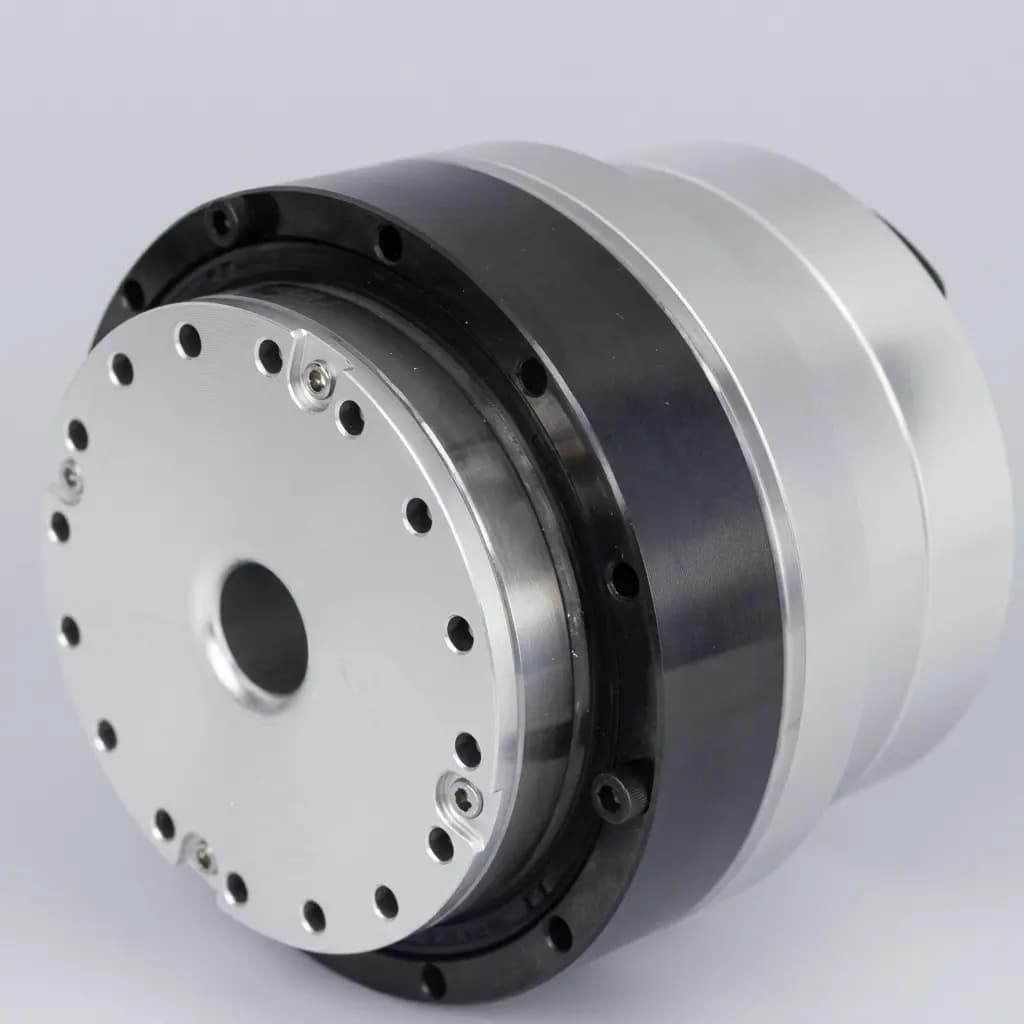
Product References for This Article
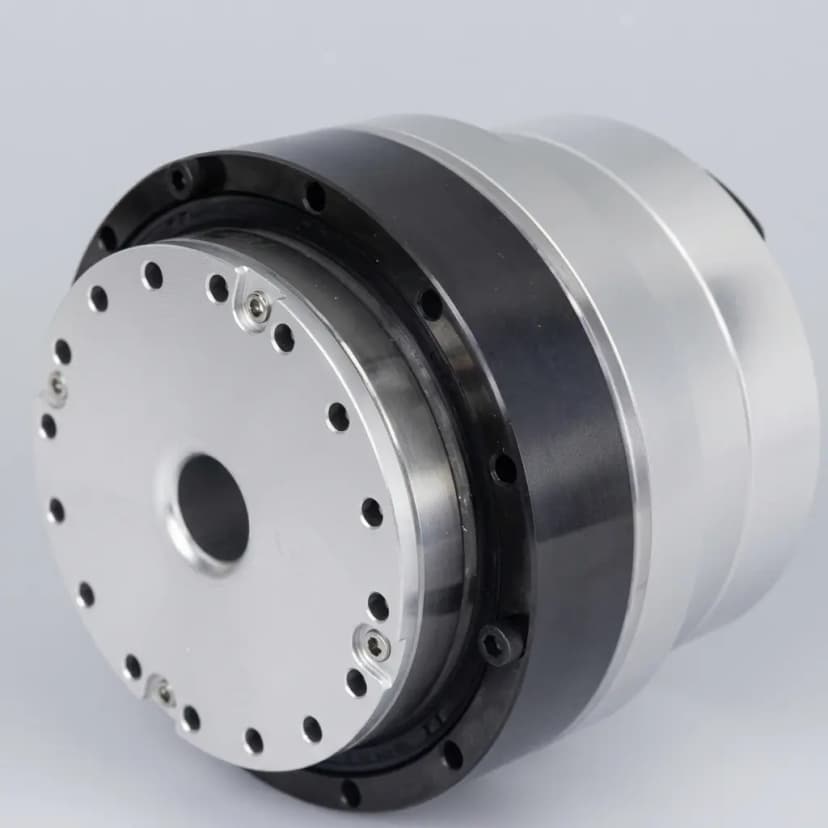
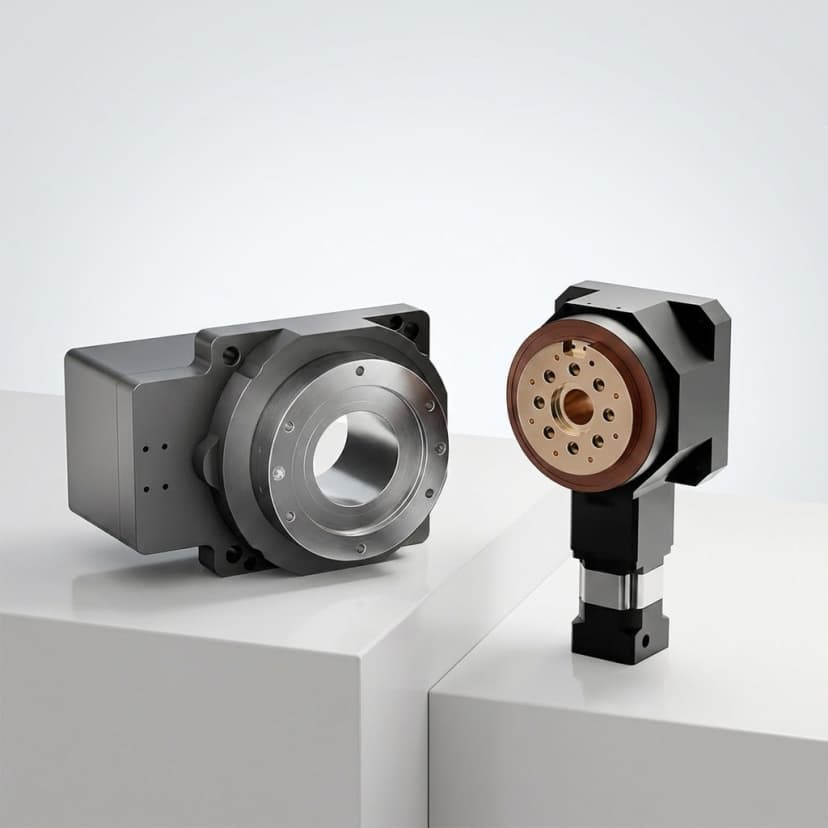
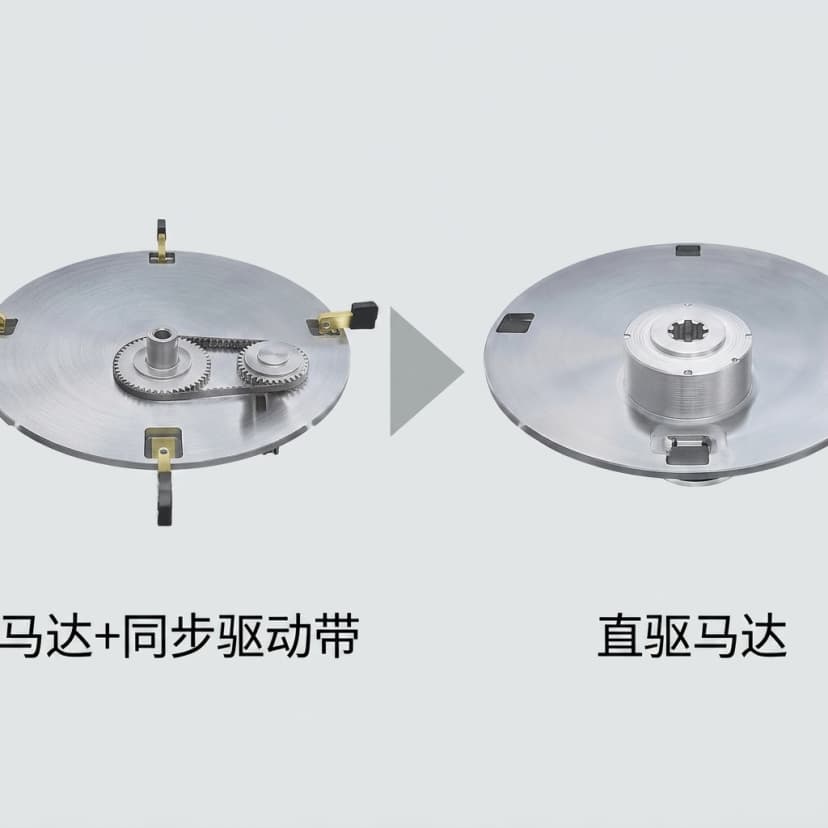
These images are included to make the engineering discussion more concrete. Use them as visual references for actuator envelope, output interface, routing, and architecture trade-offs before requesting exact drawings or datasheets.
This is not a philosophical debate — it is a physics trade-off
I have helped teams switch from harmonic to QDD, and from QDD to harmonic. Both directions work when the switch is driven by measured data, not marketing preference. The core physics trade-off is simple: a harmonic drive at 80:1 turns 0.5 Nm of motor torque into 40 Nm at the output, but it also multiplies the motor inertia by 6,400×. A QDD planetary at 6:1 turns 5 Nm of motor torque into 30 Nm at the output, multiplying inertia by only 36×.
That 178× difference in reflected inertia changes everything about how the joint responds to impacts, disturbances, and torque commands. It is not that one is "better" — it is that they solve different problems, and picking the wrong one wastes 2–4 months of integration time.
QDD vs harmonic-drive decision map
Use this qualitative map to decide which architecture to sample first. The bars show relative strength, not absolute scores. Your final choice still depends on thermal, impact, and validation testing.
- If your joint sees impacts or needs torque transparency (legged robots, exoskeletons), QDD wins on reflected inertia alone. The physics is not debatable.
- If your joint needs <1 arcmin positioning and zero-backlash holding (precision assembly, inspection arms), harmonic wins on gear precision. QDD backlash at 5–15 arcmin is not competitive here.
- If your joint needs both dynamic motion AND static holding, consider QDD + electromagnetic brake. This is cheaper and lighter than oversizing a harmonic drive to handle impacts it was not designed for.
Head-to-head specification comparison — real numbers
| Parameter | QDD (6:1 planetary, 8318 motor) | Harmonic drive (80:1, similar motor class) |
|---|---|---|
| Reflected inertia | 0.029 kg·m² (36× motor J) | 5.12 kg·m² (6400× motor J) |
| Backdrive torque (unpowered) | 0.5–1.5 Nm | 8–25 Nm (effectively non-backdrivable) |
| Continuous output torque | 24–36 Nm | 35–50 Nm |
| Peak output torque (3s) | 60–100 Nm | 80–120 Nm |
| Backlash | 5–15 arcmin | <1 arcmin |
| Transmission efficiency | 90–95% (single-stage planetary) | 65–80% (wave generator losses) |
| Typical unit cost (OEM qty 100+) | $120–280 | $200–500 (harmonic gear alone adds $80–200) |
| Lead time (custom sample) | 2–4 weeks | 4–8 weeks (harmonic gears have longer supply chains) |
The efficiency gap nobody talks about
Harmonic drives have a dirty secret: transmission efficiency is typically 65–80%, compared to 90–95% for a well-made planetary. On a 48V / 10A motor (480W input), that means a harmonic drive wastes 96–168W as heat inside the gear, while a planetary wastes only 24–48W. For a battery-powered robot running 12 joints, that is the difference between 45 minutes and 70 minutes of runtime.
I bring this up because most comparison articles focus on torque and backlash while ignoring efficiency entirely. For any battery-powered legged robot, efficiency directly determines how long the robot walks before it needs to recharge. If your business case depends on field runtime, this number matters more than peak torque.
Decision matrix with my actual recommendations
| Your robot joint needs... | My recommendation | Specific reason |
|---|---|---|
| Quadruped leg joints (any size) | QDD, no question | Impact tolerance + backdrivability + efficiency for battery life. Every major quadruped platform (MIT Cheetah, Unitree, ANYmal) uses low-ratio drives. |
| Humanoid lower limbs | QDD for hip/knee, evaluate harmonic only for ankle if torque density is critical | Lower limbs see 3–5× body weight impacts. Reflected inertia directly affects fall recovery control. |
| Exoskeleton joints | QDD with friction validation | Users feel 0.1 Nm of friction. Harmonic drives at 80:1 feel like moving through mud to the wearer. |
| 6-DOF precision arm (pick-and-place) | Harmonic or cycloidal for most axes | Sub-arcminute repeatability and zero-backlash holding are worth the extra cost when the arm handles precision tasks. |
| Research platform (general purpose) | QDD for maximum flexibility | Low-ratio joints let you switch between position control, impedance control, and torque control without hardware changes. |
Cost and supply chain reality check
A harmonic gear set (wave generator + flexspline + circular spline) from a reputable Japanese manufacturer costs $80–200 per unit at OEM quantities. The QDD equivalent — a precision planetary stage — costs $15–40. The total module cost difference narrows after motor, encoder, housing, and assembly are included, but QDD still comes in 30–40% cheaper at the 100-unit level.
Supply chain matters too. Harmonic gears from the major brands (Harmonic Drive AG, Leaderdrive, etc.) have 6–12 week lead times for custom ratios. Planetary stages from our manufacturing network ship in 2–3 weeks. For a startup iterating on a prototype, that 4–8 week difference per design cycle adds up fast.
The 6 questions I ask before recommending an architecture
- Does the joint ever get hit by external forces? If yes, QDD. High reflected inertia turns a gentle bump into a structural shock.
- Does the joint need to hold position without burning motor current? If yes, add a brake to QDD rather than choosing harmonic for holding alone.
- Is backlash below 3 arcmin a hard requirement? If yes, harmonic or cycloidal. Planetary QDD cannot hit sub-arcminute backlash economically.
- Is the robot battery-powered with a runtime target? If yes, factor in the 15–30% efficiency advantage of planetary over harmonic — this directly affects battery size and weight.
- How fast do you need to iterate on prototypes? QDD samples arrive in 2–3 weeks. Harmonic samples take 4–8 weeks. For a startup burning $50K/month, that time difference matters.
- What is the annual volume forecast? Below 500 units/year, QDD is almost always more cost-effective. Above 5,000 units/year, the cost gap narrows but QDD still has an edge on lead time.
Architecture switching risk checklist
| Switching from → to | Do not assume | Test this first |
|---|---|---|
| Harmonic → QDD | Same peak torque = same robot behavior | Backdrive torque, thermal soak at actual duty cycle, holding with brake, and controller gain retuning (budget 1–2 weeks) |
| QDD → Harmonic | Higher stiffness = better dynamic behavior | Impact response with 3× body weight ground reaction force, reflected inertia effect on gait tuning, and battery runtime at real duty |
| Any catalog module → your custom spec | Mounting hole compatibility = mechanical fit | Cable exit clearance through full range of motion, thermal contact area with your housing, and encoder wiring pinout match |
How to run a fair comparison on your bench
If you are genuinely undecided, order one sample of each and run the same 5 tests: (1) backdrive torque at 8 positions, (2) 30-minute thermal soak at your real duty cycle, (3) torque ripple at 1 rad/s, (4) impact drop test from 15 cm, (5) position tracking accuracy at 0.5 Hz sinusoidal motion. Compare the results against your specific joint requirements, not against each other.
The winner is whichever architecture has fewer unresolved risks. That framing prevents the debate from becoming ideological. I have seen teams argue for months about QDD vs harmonic based on first principles, when $600 worth of samples and a week of testing would have given them a clear answer.
Selection Metrics
| Metric | Review Range | Why It Matters |
|---|---|---|
| Reduction ratio | Low-ratio for QDD, high-ratio for harmonic joints | Ratio shapes torque multiplication, speed, inertia, backdrivability, and control feel. |
| Backlash and stiffness | Architecture and supplier dependent | Positioning tasks and dynamic contact tasks often value these trade-offs differently. |
| Thermal headroom | Duty-cycle dependent | Both architectures can fail if repeated motion cycles are ignored. |
| Static holding requirement | Joint and safety-state dependent | QDD may need a brake or control strategy when the axis must hold load without continuous power. |
| Architecture change risk | Prototype-specific | Replacing one architecture with another can affect controller gains, wiring, mounting, test plans, and procurement documents. |
RFQ Checklist
- Current actuator architecture and pain points
- Required stiffness, backlash, backdrivability, and holding behavior
- Torque-speed-voltage targets and repeated duty cycle
- Impact/contact assumptions and allowable reflected inertia
- Mechanical envelope and output interface
- Prototype test plan and decision deadline
- Whether the joint needs safe holding after power loss, brake integration, or manual backdrive
- What sample evidence is needed: thermal data, backlash check, backdrive test, drawing, CAD, or inspection record
Related Pages
Buyer FAQ
Can QDD replace harmonic-drive joints in all robots?
No. QDD is strongest when dynamic torque behavior and backdrivability matter. Harmonic-drive joints can still be better for compact high-ratio stiffness and precision positioning.
What is the fastest way to compare them for a real project?
Share the joint location, torque-speed target, duty cycle, envelope, stiffness/backlash needs, and current actuator pain point. A supplier can then suggest whether QDD is worth sampling.
What should procurement ask before switching architectures?
Ask for the proposed ratio, thermal validation plan, backdrive and backlash check method, brake or holding strategy, customization boundary, sample documentation, and the changes required before pilot-batch release.
Inquiry Email
Include robot type, joint location, torque/speed/voltage targets, quantity, and destination.
Instant Chat
+86 18857971991
Send QDD actuator specs, STEP files, or actuator references for engineering review.